

Understanding Common Sprains: A Simple Guide for Malaysians by Dr Sanjiv Rampal
Ever twisted your ankle playing futsal or jammed your finger cooking? Chances are, you’ve experienced a sprain. But what exactly is a sprain, and what are the most common types seen in Malaysian clinics? Let’s break it down in simple terms.
A sprain happens when the strong, stretchy tissues that connect your bones to each other, called ligaments, get stretched or torn. It’s different from a strain, which involves muscles or tendons. Sprains can range from mild a slight stretch) to severe a complete tear of the ligament.
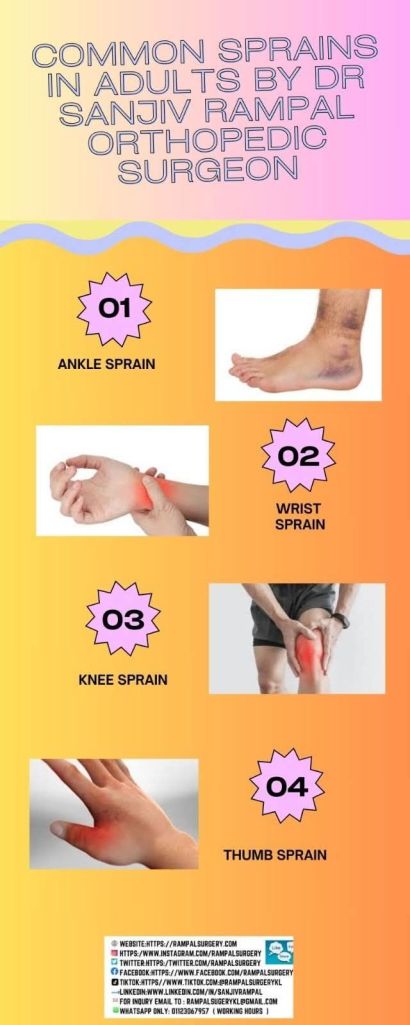
Here are the most common types of sprains Dr. Sanjiv Rampal sees in family medicine clinics across Selangor:
* Ankle Sprains: These are the champions of sprains! They often happen when you twist or roll your ankle, especially on uneven ground, during sports, or even just by stepping awkwardly. You might feel a sharp pain, see swelling, and find it hard to put weight on your foot.
* Wrist Sprains: Ever fallen and instinctively put out your hand to break the fall? That’s a classic way to get a wrist sprain. The impact can stretch or tear the ligaments in your wrist, leading to pain and difficulty moving your hand.
* Knee Sprains: While common in athletes, anyone can sprain their knee. Sudden twists, direct hits to the knee, or awkward landings can injure the ligaments that stabilize your knee joint. You might feel a pop, followed by pain and swelling.
* Finger Sprains: Often called “jammed fingers,” these are common in sports like basketball or volleyball when a ball hits the tip of your finger. They can also happen from accidents around the house. Your finger might be painful, swollen, and difficult to bend.
* Thumb Sprains: Activities like skiing (from holding a ski pole) or racquet sports can put your thumb at risk. A thumb sprain often involves the ligament at the base of your thumb, making it painful to grip things.
How are Sprains Treated?
Good news! Most sprains can be managed right at home with a simple method called R.I.C.E. This stands for :
* Rest: Give the injured part a break. Avoid activities that make the pain worse.
* Ice: Apply an ice pack to the injured area for 15-20 minutes at a time, several times a day. This helps reduce swelling and pain.
* Compression: Gently wrap the area with an elastic bandage (not too tight!) to help with swelling.
* Elevation: Try to keep the injured part raised above the level of your heart to further reduce swelling.
For more severe sprains, you might need to see a doctor. They might recommend physical therapy (exercises to help you regain strength and movement) or a brace to support the injured area while it heals.
Have you ever experienced a sprain? Share your tips for recovery or what helped you get back on your feet in the comments below!
 Rampalsurgery. com
Leave a comment