
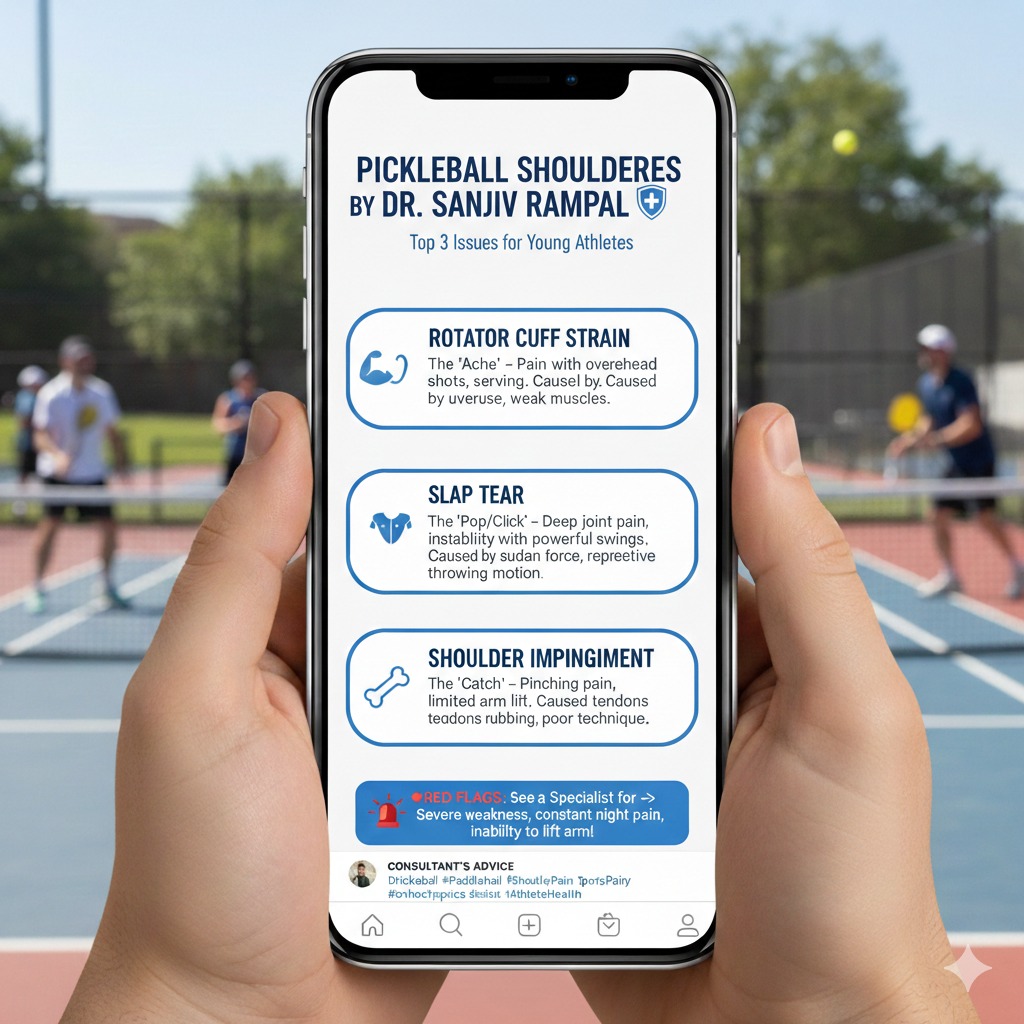
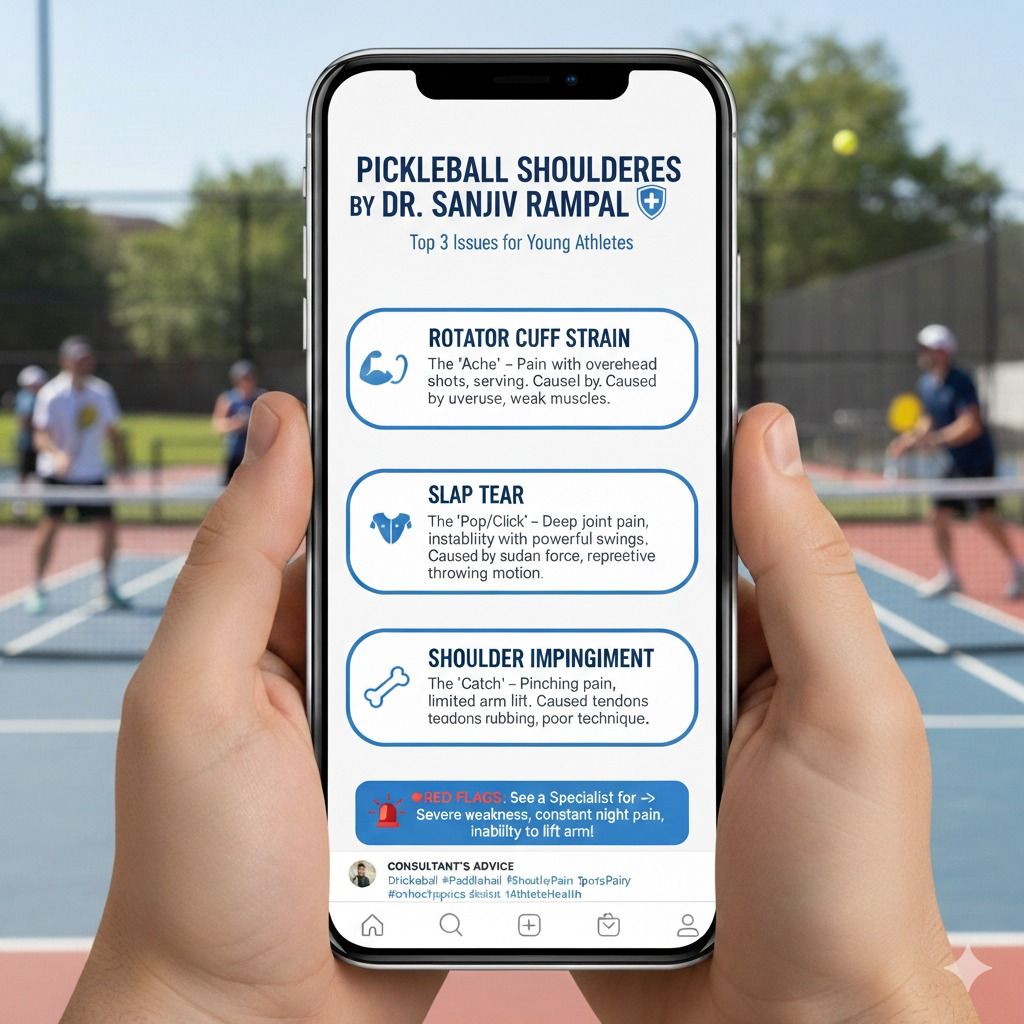
PICKLEBALL SHOULDER INJURIES
By Dr. Sanjiv Rampal, Orthopaedic Consultant KL Top 3 Issues & How to Prevent Them!
1️⃣. Rotator Cuff Strain: The “Ache”
What it is: Tiny tears or inflammation in the group of muscles and tendons surrounding your shoulder joint.
Why in Pickleball/Paddleball: Repetitive overhead serves, powerful smashes, and sudden arm movements. Often due to overuse or underlying muscle weakness.
Symptoms: Dull ache in the shoulder, especially with overhead activities, reaching behind your back, or sleeping on the affected side. Weakness when lifting or rotating the arm.
2️⃣ SLAP Tear: The “Pop” or “Click”
What it is: A tear to the labrum (the rim of cartilage that surrounds the shoulder socket) where the biceps tendon attaches. SLAP stands for Superior Labrum Anterior to Posterior.
Why in Pickleball/Paddleball: Forceful overhead movements, sudden powerful swings (especially serving), or falling on an outstretched arm. Repetitive throwing motion can also contribute.
Symptoms: Deep, aching pain in the shoulder, clicking, popping, or grinding sensation, a feeling of instability, and pain with overhead activities or throwing.
3️⃣ Shoulder Impingement: The “Catch”
What it is: When the tendons of the rotator cuff (and sometimes the bursa) get “pinched” between the bones in your shoulder joint.
Why in Pickleball/Paddleball: Repetitive overhead arm elevation, poor posture, or issues with technique that narrow the space for the tendons.
Symptoms: Pain when lifting your arm, especially between 60-120 degrees, pain that radiates down the side of your arm, weakness, and difficulty reaching overhead or behind your back.
5: Prevention Methods (Crucial for Athletes!)
PREVENTION IS KEY! Protect Your Shoulders:
Warm-Up Thoroughly: Dynamic stretches focusing on shoulder rotation and arm swings before playing.
Strengthen & Condition: Focus on rotator cuff, scapular stabilizer, and core strength. Elastic band exercises are excellent!
Proper Technique: Seek coaching to ensure efficient and safe strokes, especially overhead serves and volleys. Avoid “chicken winging.”
Gradual Progression: Don’t suddenly increase playing time or intensity. Build up gradually.
Listen to Your Body: Don’t play through pain. Rest and recovery are essential.
Cool Down & Stretch: Gentle static stretches for the shoulder after playing.
WHEN TO SEE DR. SANJIV RAMPAL
Severe weakness or inability to lift your arm.
Constant night pain or pain that prevents sleep.
Significant swelling or bruising.
Pain that doesn’t improve with rest and ice after a few days.
Any “pop,” “click,” or “grinding” that persists.
Don’t let shoulder pain keep you off the court! Early assessment leads to faster recovery.
Social Media Caption
Ready to smash that pickleball, but worried about your shoulder?As Dr. Sanjiv Rampal, an Orthopaedic Consultant in KL, I’ve seen how common shoulder injuries are in our passionate pickleball and paddleball community.
This post covers the Top 3 Shoulder Injuries I frequently diagnose and, more importantly, gives you crucial prevention tips to keep you in the game! From Rotator Cuff Strains to SLAP Tears and Impingement – understanding these can save your season.
Swipe up to learn how to keep your shoulder strong and pain-free. Remember, prevention and early action are your best defence!
#PickleballShoulder #ShoulderPain #SportsInjury #OrthopaedicsKL #DrSanjivRampal #PickleballTips #AthleteHealth #InjuryPrevention #KualaLumpur #Paddleball #SportsMedicine
 Rampalsurgery. com
Leave a comment