

Is Your Hand “Falling Asleep” More Than You Are? A Guide to Carpal Tunnel Syndrome
Hello to my professional network and patients here in Kuala Lumpur.
As an orthopaedic surgeon, I often see patients who arrive at my clinic frustrated. They describe a “clumsiness” that wasn’t there before. They mention a persistent tingling. It makes holding a morning coffee or typing a report feel like a marathon. If you’ve been “shaking your hands” to wake them up in the middle of the night, you aren’t alone. No, you aren’t just “sleeping wrong.”
You likely have Carpal Tunnel Syndrome (CTS). Let’s break down what this means, how to spot it, and how we can treat it together.
What Exactly is the “Tunnel”?
Think of your wrist as a busy highway underpass. The “Carpal Tunnel” is a narrow passageway surrounded by bones and ligaments. The median nerve runs through this tunnel. It controls sensation to your thumb and first three fingers. The tendons that flex your fingers also run through this tunnel.

When there is swelling or pressure in this tight space, the nerve gets squeezed. The result? A literal “short circuit” in your hand’s communication line.
The Top Symptoms: Is Your Nerve Signaling for Help?
CTS doesn’t usually happen overnight; it creeps up. Look out for these three major red flags:
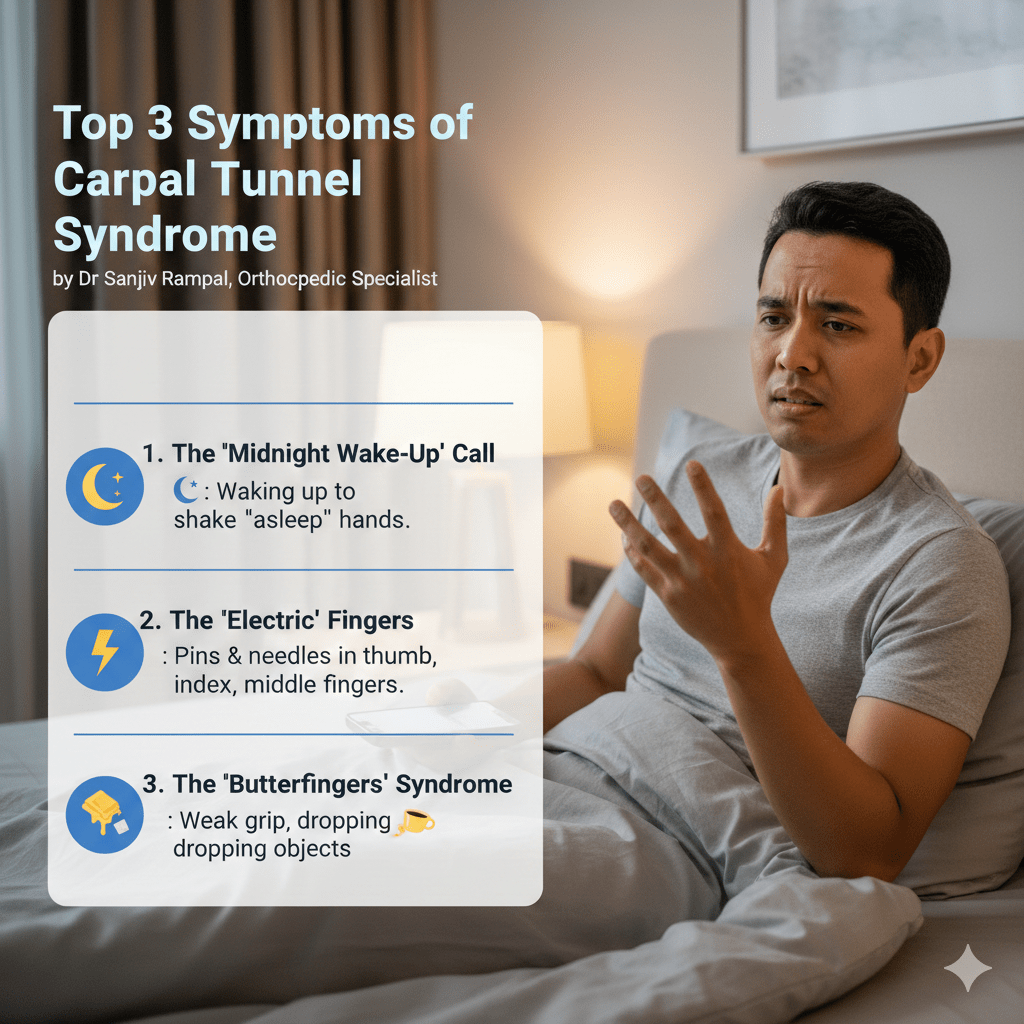
- The Midnight Tingling: Numbness or pain that wakes you up at 3:00 AM. Many patients find themselves shaking their hands over the side of the bed to get the blood flowing.
- The “Electric” Shock: A pins-and-needles sensation that radiates from the wrist into the thumb, index, and middle fingers. Interestingly, your pinky finger usually feels perfectly fine!
- The Butterfingers Effect: You might notice you’re dropping things more often. This happens because the nerve compression eventually weakens the muscles at the base of your thumb, affecting your grip.
Non-Surgical Treatment: The First Line of Defense
The good news is that surgery is rarely the first step. For many of my patients in KL, we start with “conservative” management:
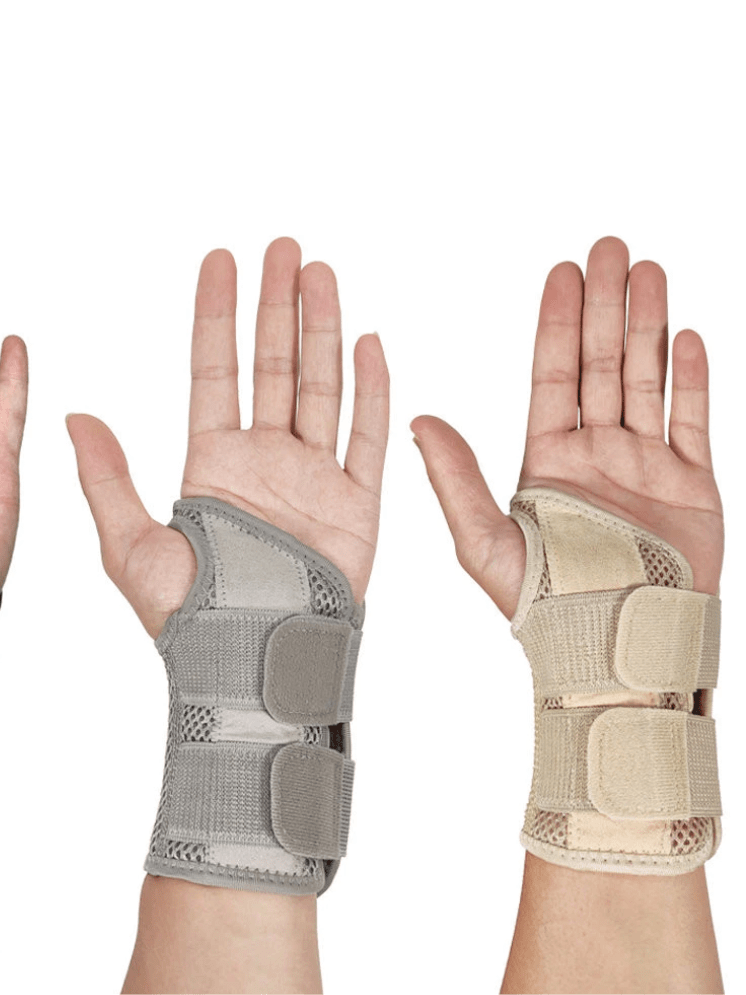
- Wrist Splinting: Wearing a neutral-position splint at night. This prevents you from curling your wrists while you sleep, keeping the “tunnel” as wide open as possible.
- Activity Modification: If you’re a heavy computer user or your hobby involves repetitive gripping (like badminton or gardening), we look at ergonomic adjustments. Small changes to your workstation can yield big results.
- Nerve Gliding Exercises: Specific movements designed to help the median nerve slide more smoothly through the carpal tunnel.
- Anti-inflammatory Medication: Short-term use of NSAIDs to reduce swelling around the nerve.
Home Remedies: What You Can Do Today
While you wait for your appointment, try these simple steps to ease the pressure:

- Ice It Down: Apply a cold pack to the wrist for 10–15 minutes to reduce local inflammation.
- Take “Micro-Breaks”: If you are typing or doing manual work, set a timer for every 30 minutes. Stretch your fingers and wrists.
- Keep it Straight: Try to keep your wrists in a neutral (straight) position as much as possible. Avoid prolonged flexion or extension.
When Should You See a Specialist?
I always tell my patients: “Don’t wait for the numbness to become permanent.”
You should book a consultation if:
- Symptoms have persisted for more than two weeks despite rest.
- You have constant numbness (you can’t feel the texture of objects).
- You notice the muscle at the base of your thumb looks “thinner” or wasted.
- The pain is interfering with your sleep or your ability to perform your job.
Modern diagnostics, like Nerve Conduction Studies (NCS), allow us to pinpoint exactly how much pressure the nerve is under, helping us decide if physiotherapy or a minor procedure is the best path forward.
Final Thoughts
Carpal Tunnel Syndrome is a very treatable condition, especially when caught early. In our fast-paced city life, our hands are our most important tools—take care of them!
Disclaimer
http://www.Rampalsurgery.com is for general informational purposes only. It does not constitute the practice of medicine, nursing, or other professional health care services. This includes the giving of medical advice. No doctor/patient relationship is formed. The use of information on this podcast or materials linked from this podcast is at the user’s own risk. The content of this podcast is not intended to be a substitute for professional medical advice, diagnosis, or treatment. Users should not disregard or delay in obtaining medical advice for any medical condition they may have and should seek the assistance of their healthcare professionals for any such conditions
 Rampalsurgery. com
Leave a comment