
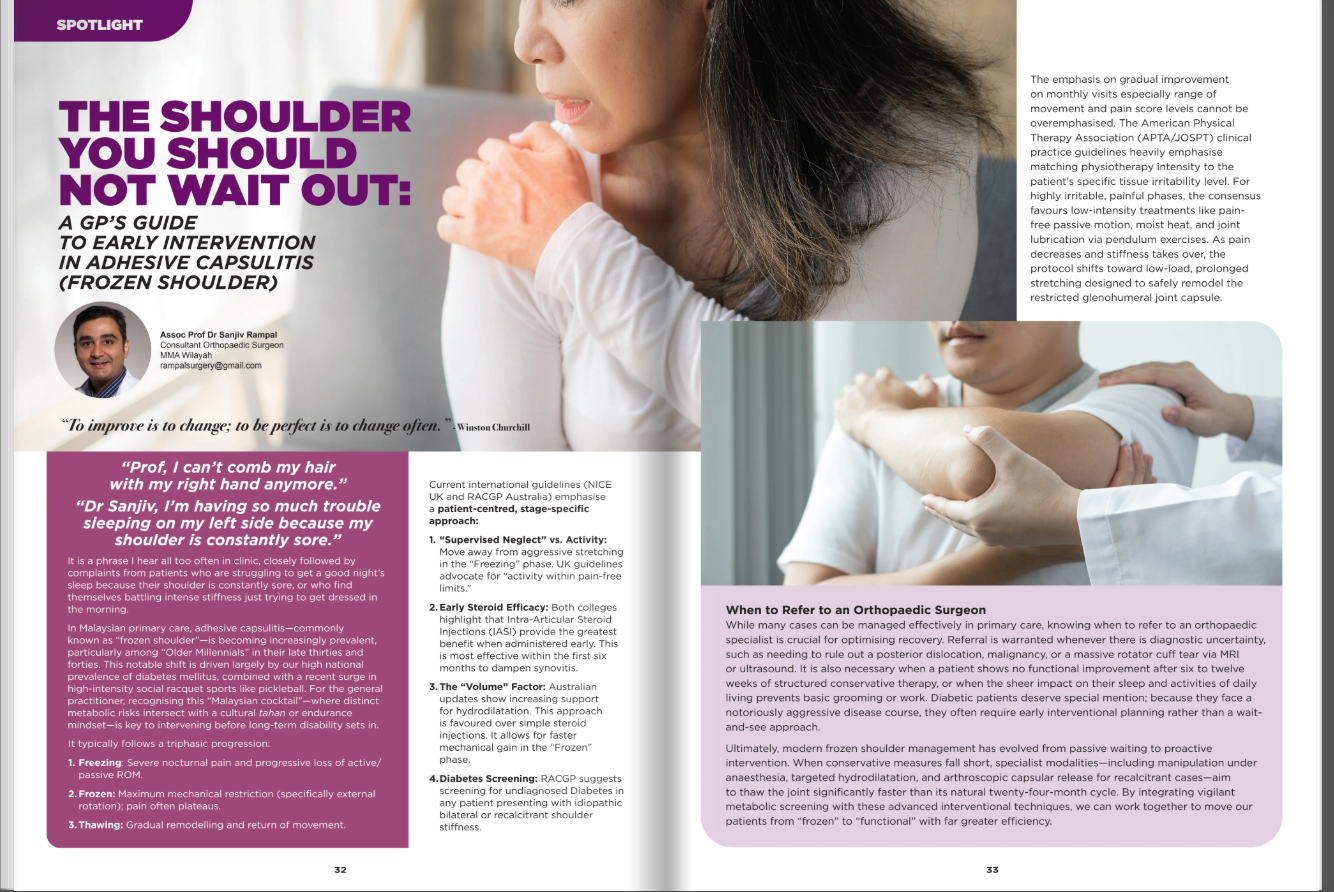
Prof Sanjiv shares the latest clinical thinking on frozen shoulder — straight from a recent feature for fellow doctors, translated for you.
“Prof, I can’t comb my hair with my right hand anymore.”
“Dr Sanjiv, I can’t sleep on my left side — my shoulder just won’t let me.”
If either of those sentences sounds painfully familiar, you’re not alone — and you’re certainly not imagining it. This condition is called adhesive capsulitis, better known as frozen shoulder, and it’s becoming increasingly common here in Malaysia, especially among our “older millennials” in their late thirties and forties.
Prof Sanjiv recently shared an in-depth clinical update on this exact topic for general practitioners — because staying connected with fellow doctors and keeping everyone’s knowledge current is something he genuinely enjoys, not just a professional box to tick. Here’s what that update means for you, our patients and friends.
Why Is This Happening to So Many of Us?
A few things seem to be colliding at once: rising rates of diabetes, and a national love affair with high-intensity racquet sports like pickleball. It’s a very “Malaysian” combination — and it means the shoulder is under more strain than it used to be, at exactly the age when it’s least forgiving.
The Three Stages (And Why Patience Matters)
A short overview on shoulder pain in adults by Dr Sanjiv Rampal Orthopaedic Surgeon Kuala Lumpur
Frozen shoulder tends to move through three phases:
- Freezing — bad nighttime pain and a real loss of movement
- Frozen — stiffness peaks, movement is very limited, but the pain often settles a little
- Thawing — things gradually loosen up and movement returns
Left entirely alone, this whole journey can take up to two years. The good news? It doesn’t have to.
The Good News: Doctors Now Move Faster
One of the most encouraging shifts in current guidelines is a move away from “just push through the pain” and toward gentle, well-timed care. Depending on which stage you’re in, that might mean:
- Pain-free, low-intensity movement early on — no aggressive stretching
- A well-timed steroid injection into the joint, which works best when given early
- Gentle joint-stretching procedures for stubborn stiffness
- For diabetic patients especially, earlier and more proactive planning, since frozen shoulder tends to be tougher and more persistent in this group
When Should You See a Specialist?
Most cases can absolutely be managed by your GP. But it’s worth seeing an orthopaedic specialist if:
- Something doesn’t quite add up and imaging (MRI or ultrasound) is needed to rule out other causes
- Six to twelve weeks of proper treatment hasn’t moved the needle
- Your shoulder pain is seriously disrupting your sleep or your ability to get dressed, work, or care for yourself
The Bigger Picture
What excites Prof Sanjiv most about this update isn’t just the new evidence — it’s the shift in mindset it represents. Frozen shoulder no longer has to mean two years of gritting your teeth. With earlier recognition, the right conservative care, and — when needed — a timely referral, patients can move from “frozen” to “functional” far sooner than before.
This is exactly the kind of knowledge-sharing Prof Sanjiv loves being part of — helping fellow doctors stay current, so that patients like you get better care, faster.
Noticing shoulder stiffness or nighttime pain that just won’t quit? Don’t wait it out — reach out to the clinic to have it properly assessed.
📧 rampalsurgery@gmail.com 🌐 www.rampalsurgery.com


Leave a Reply